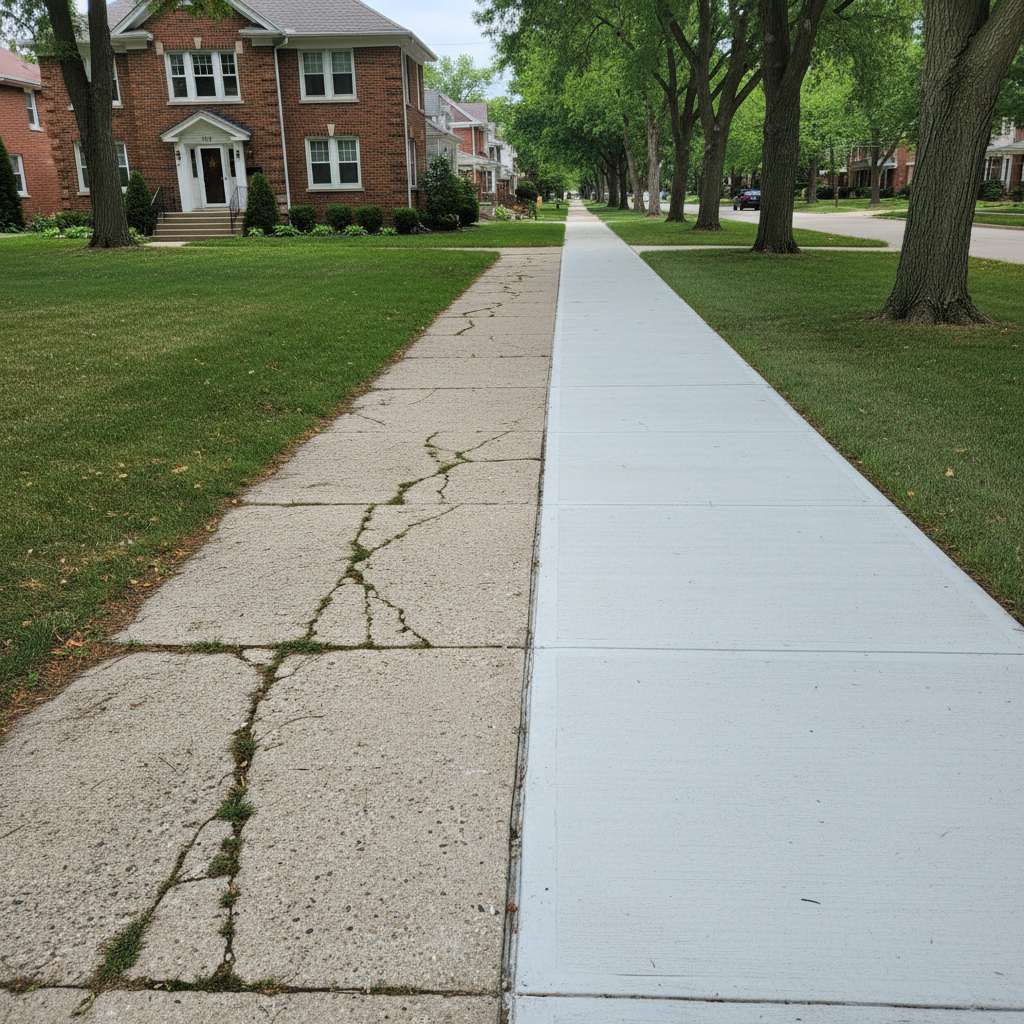
Alright, let's talk sidewalks. You're looking to put in a new one, or maybe replace an old cracked mess, and you're probably wondering what the best way to go is. For most folks, it boils down to two main choices: a traditional poured concrete slab or using concrete pavers. Both have their place, but for your home here in Oak Park, one usually makes a lot more sense. I've seen plenty of both over the years, and I can tell you what I've learned.
Poured Concrete: The Tried-and-True Method
This is what most people picture when they think 'sidewalk.' We come in, prep the ground, set up forms, and pour a big, continuous slab of concrete. It's pretty straightforward, and it's been the standard for a long time for good reason.
Cost
Generally speaking, poured concrete is your more budget-friendly option upfront. Less labor involved in the installation compared to pavers, and the material itself is usually cheaper per square foot. If you're trying to keep costs down, this is often the way to go.
Durability
A well-installed poured concrete sidewalk is tough. It can handle heavy foot traffic, bikes, even light vehicles if it's thick enough and properly reinforced. The big enemy here in Illinois, though, is our freeze-thaw cycles. Water gets into tiny cracks, freezes, expands, and then you get bigger cracks, heaving, and spalling. That's why you see so many broken-up sidewalks around town, especially in older areas like the Frank Lloyd Wright historic district where some of those sidewalks have been around for a century.
Maintenance
Maintenance is pretty low. Keep it clean, seal it every few years to help protect against moisture, and you're good. If a section cracks badly, though, you're usually looking at cutting out that whole section and repouring it. It's not a small fix, and it's hard to make a patch blend in perfectly.
Appearance
It's classic, clean, and can be stamped or colored to add some visual interest. But let's be honest, a plain gray concrete sidewalk isn't exactly a showstopper. It's functional, and it gets the job done.
Concrete Pavers: The Flexible Alternative
Pavers are individual concrete units that interlock or sit close together on a prepared base. Think of them like a big, tough puzzle for your walkway.
Cost
This is where pavers usually lose out on the initial investment. The material itself is more expensive than bulk concrete, and the installation is much more labor-intensive. Each paver has to be laid by hand, cut to fit, and then the whole thing needs to be compacted and joint sand swept in. So, expect to pay more upfront.
Durability
Here's where pavers really shine, especially for our climate. Because they're individual units, they have flexibility. When the ground freezes and thaws, or shifts a little, the pavers can move slightly with it. This significantly reduces the cracking and heaving you see with solid concrete slabs. If one paver gets damaged, you can pull it out and replace just that one. Easy peasy.
Maintenance
Maintenance is also pretty low. You might need to sweep in new joint sand every now and then, especially if you get a lot of washout. Weeds can sometimes sprout between pavers, but a quick spray or pull takes care of it. And like I said, individual repairs are a breeze.
Appearance
This is another big win for pavers. They come in a huge variety of shapes, sizes, colors, and textures. You can create really beautiful, custom designs that add a lot of curb appeal to your home. From a traditional brick look to more modern patterns, you've got a lot of options to make your walkway stand out.
My Recommendation for Oak Park Homeowners
Look, if you're on a super tight budget and just need a basic, functional path, poured concrete will get you there. Ace Concrete can pour you a solid slab that'll last for years.
However, for most homeowners in Oak Park, especially considering our weather and the desire for lasting beauty and low hassle, I almost always recommend concrete pavers for sidewalks.
Why? The flexibility. That's the key. Our winters are brutal on solid concrete. The ability of pavers to move with the ground means you'll have fewer cracks, less heaving, and a sidewalk that looks good and lasts longer without major repairs. The aesthetic appeal is also a huge bonus – it really elevates the look of your home. Yes, the initial cost is higher, but the long-term benefits in durability, ease of repair, and curb appeal usually make it a far better investment here in the Midwest.
It's your home, your choice, but that's my two cents from years of laying down concrete in this town. Think long-term, and you'll often find pavers are the smarter play.