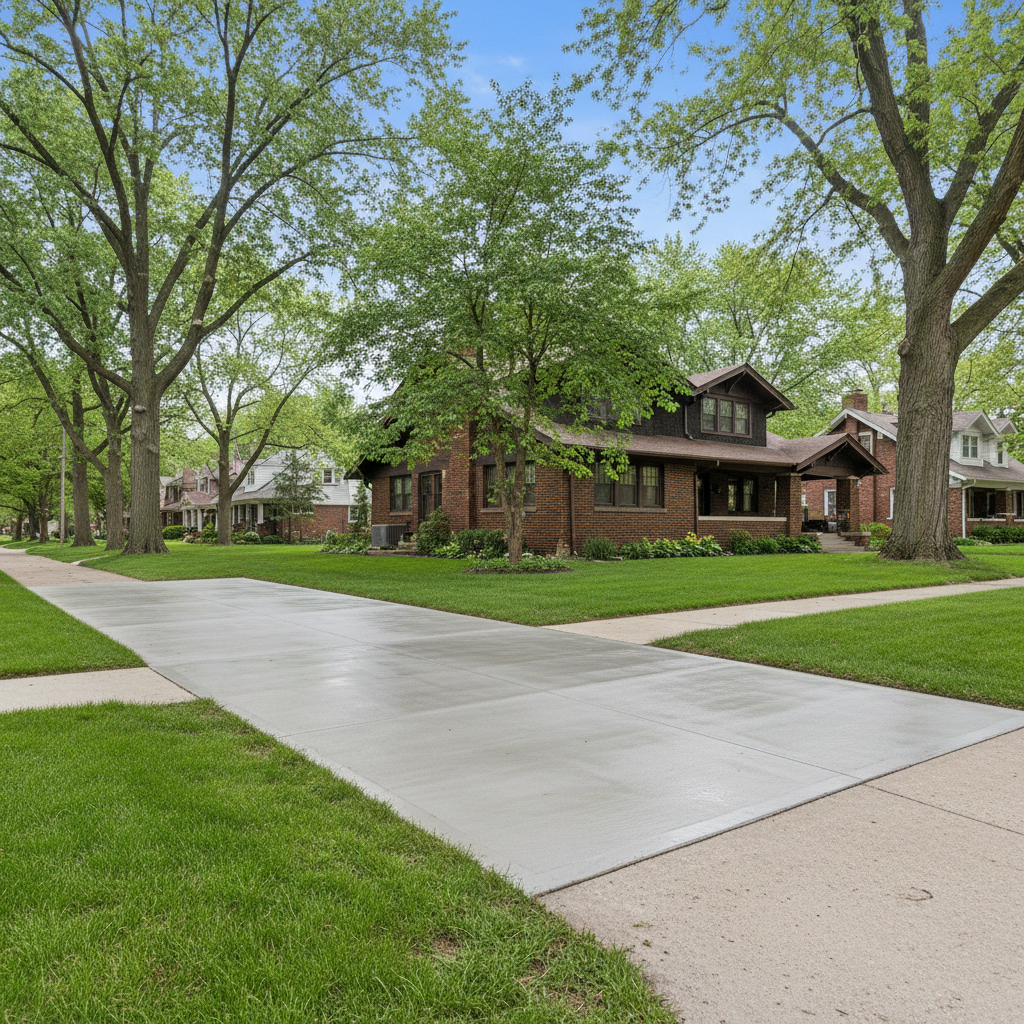
So, you have invested in concrete repair, maybe fixed up that cracked patio or uneven walkway. Good for you! But here is the deal: getting it fixed is only half the battle, especially here in Oak Park. Our Illinois weather, with its brutal freeze-thaw cycles and heavy spring rains, is tough on concrete. If you do not take care of that repair, you will be right back where you started sooner than you think. Let us talk about how to make sure your repaired concrete lasts here in Oak Park.
Extend the Life of Your Concrete Repair in Oak Park
The biggest thing you can do to protect your concrete, new or repaired, is to keep water out of it. Concrete is porous, and when water seeps in and freezes, it expands, causing cracks and spalling. That is why sealing is so important for concrete in Oak Park.
- Seal it Up: A good quality sealer creates a waterproof layer and protects against de-icing chemicals. For our climate in Oak Park, you will want to apply sealer during warmer months, ideally when temperatures are consistently between 50°F and 80°F. Trying to seal when it is too cold means the sealer will not cure right, and you will end up with a weak, hazy mess that will not protect anything.
- Mind Those Expansion Joints: Those gaps in your concrete are not just for show; they let the concrete expand and contract without cracking. Keep them clean of dirt, weeds, and debris. If the filler material in them is missing or worn, replace it. Water getting into those joints is a primary cause of problems for concrete in Oak Park.
- Go Easy on the De-icers: We all want clear sidewalks in winter in Oak Park, but some de-icing chemicals, especially those with ammonium nitrate or ammonium sulfate, can seriously damage concrete and its sealers. Sand is a good alternative for traction without the chemical harm to your concrete.
- Proper Drainage is Key: Make sure water drains away from your concrete surfaces, not towards them. Poor drainage can lead to sinking slabs and other issues. This is especially true in areas like Oak Park where we have clay-heavy soil, which can cause settlement if not properly managed for your concrete.
Regular Maintenance for Your Concrete in Oak Park: What You Should Be Doing
Think of it like changing the oil in your car; a little regular attention goes a long way for your concrete here in Oak Park.
- Clean Regularly: Sweep away dirt, leaves, and other debris from your concrete surfaces. A good rinse with a hose periodically helps too. For expansion joints, a leaf blower or compressed air can get out stubborn grit.
- Inspect Annually: Take a walk around your property in Oak Park in late fall and early spring. Look closely at your repaired concrete areas. Are there new cracks? Is the sealer still holding up? Are the expansion joints clear and filled?
- Reapply Sealer as Needed: Depending on the type of sealer and how much traffic your concrete sees, you might need to reapply every few years. If water is not beading up on the surface anymore, it is probably time to reapply sealer to your concrete in Oak Park.
Warning Signs of Problems with Your Concrete in Oak Park
Your concrete will tell you when something is wrong, if you know what to look for. Catching these problems early can save you a lot of headache and money on your concrete repairs in Oak Park.
- New or Widening Cracks: Hairline cracks can be cosmetic, but if you see cracks getting wider than a quarter-inch, or if they are spreading, that is a red flag for your concrete. These can indicate deeper structural issues or soil movement in Oak Park.
- Spalling, Pitting, or Flaking: This is when the top layer of concrete starts to peel, chip, or flake off. It often happens because water got into the concrete and froze, or from de-icing salts. This is a common concrete problem we see in Oak Park.
- Uneven or Sinking Slabs: If a section of your concrete looks like it is sinking or has become uneven, it could be due to soil settling, erosion, or poor subgrade preparation. This creates trip hazards and can lead to more serious structural damage to your concrete.
- Discoloration or Staining: Beyond just dirt, unusual dark spots or white powdery deposits (efflorescence) can signal moisture problems or chemical reactions within the concrete.
- Hollow Sounds: If you tap on your concrete and hear a hollow sound, it might mean there are voids underneath the slab.
When to Call a Professional Concrete Contractor in Oak Park
Sometimes, a DIY fix just is not enough, or the problem is bigger than it looks. That is when you call in the pros, like us at Ace Concrete, your local concrete contractor in Oak Park.
- Structural Cracks: Any crack that is wide, deep, or shows signs of significant movement needs a professional assessment from a concrete contractor in Oak Park. Ignoring these can lead to expensive concrete repairs down the road.
- Sinking or Uneven Concrete: If you have got trip hazards or sections pulling away from your home, you need expert help. We can often lift and level these concrete slabs in Oak Park, but the underlying cause of settlement needs to be addressed.
- Extensive Spalling or Pitting: While small areas might be patchable, widespread surface deterioration often means the concrete's integrity is compromised and might need resurfacing or more extensive concrete repair.
- Water Drainage Issues: If you constantly have standing water around your concrete, or if water is clearly eroding the base, a professional concrete contractor in Oak Park can diagnose and fix the drainage problem, which is important for long-term concrete health.
- Recurring Problems: If you have tried patching or sealing and the same issues keep coming back, it is a sign that there is a deeper problem that requires a professional diagnosis from a concrete contractor.
We have seen it all here in Oak Park, from the old foundations in the historic district to newer driveways battling our tough winters. Do not let a small concrete problem turn into a big headache. A little proactive care and knowing when to call for help will keep your concrete repairs strong for years to come here in Oak Park.