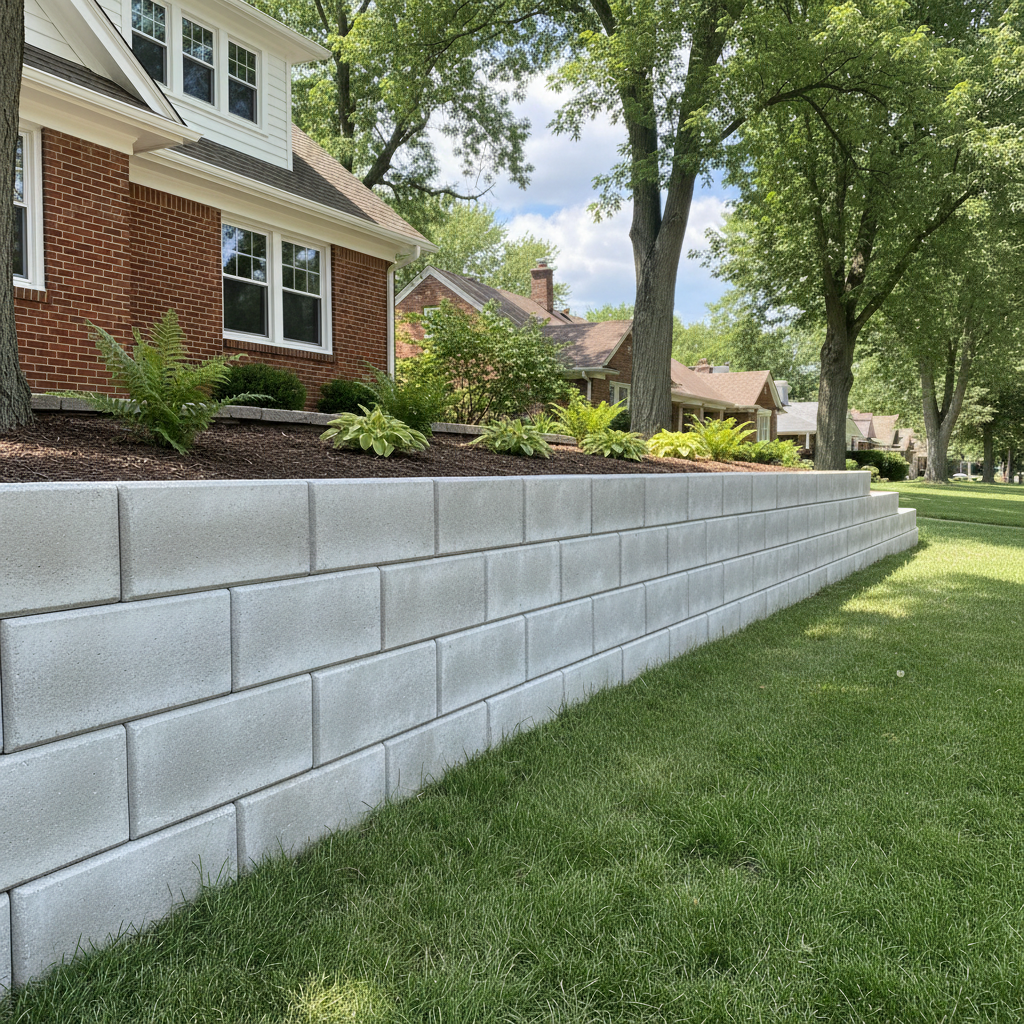
You've got a concrete retaining wall, maybe it's holding back a sloped yard in the Frank Lloyd Wright Historic District, or perhaps it's defining your garden beds. Either way, you want it to last, right? These walls are tough, especially when Ace Concrete builds 'em, but they're not invincible. Not with the kind of weather we get here in Illinois, anyway.
Making Your Wall Last Longer in Our Climate
Our winters are brutal, plain and simple. Freezing and thawing cycles are the biggest enemy of any concrete structure, including your retaining wall. Water gets into tiny cracks, freezes, expands, and makes those cracks bigger. Do that enough times, and you've got real problems on your hands.
The best way to fight this is to keep water away from the wall as much as possible. Make sure your gutters drain far from the wall's base. If you've got a downspout dumping right next to it, that's a recipe for disaster. Extend those downspouts! Also, check the grading of the soil around your wall. It should slope away from the wall, not towards it. Standing water at the base will eventually undermine the foundation and lead to structural issues.
Another key is sealing. I always recommend a good quality penetrating sealer for concrete retaining walls. It doesn't just sit on top; it soaks in and creates a barrier against moisture. You'll want to reapply it every few years, depending on the product and how much sun and weather your wall gets. Think of it like sunscreen for your concrete, if you will.
Regular Maintenance: What You Actually Need to Do
This isn't rocket science, but it takes consistency. Here's what I tell my clients:
- Clean it up: Once or twice a year, give your wall a good cleaning. Get rid of any dirt, moss, or mildew. A stiff brush and some mild detergent usually do the trick. You can use a pressure washer, but be careful not to use too high a setting, especially on older concrete, as it can damage the surface.
- Check your drainage: If your wall has weep holes (those small openings designed to let water escape from behind the wall), make sure they're clear. Leaves, dirt, and debris can clog them up, trapping water behind the wall. That's a huge problem waiting to happen.
- Look at the landscaping: Tree roots can be incredibly destructive. If you have large trees or shrubs planted too close to the wall, their roots can grow into and through the concrete, causing cracks and shifting. Keep an eye on that. Trim back any plants that are growing directly against the wall, as they can hold moisture there.
- Inspect for cracks: This is probably the most important part. Walk your wall regularly, especially after a harsh winter or heavy rain. Look for any new cracks, or old cracks that seem to have gotten bigger.
Warning Signs of Bigger Problems
Some cracks are just cosmetic, hairline stuff that happens as concrete settles and cures. But others are serious. Here's what to watch for:
- Horizontal cracks: These are almost always a red flag. They usually mean there's significant pressure building up behind the wall, pushing it outwards.
- Stair-step cracks: If you have a block or segmented retaining wall, cracks that follow the mortar joints in a stair-step pattern can indicate shifting or settlement.
- Bulging or leaning: If any section of your wall looks like it's bowing outwards or leaning, you've got a structural issue. Don't ignore this.
- Water seeping through the wall: If you see constant water seeping through the face of the wall, especially if it's muddy, your drainage system behind the wall isn't working right.
- Significant settlement: If the ground in front of or behind the wall has dropped noticeably, that's a sign of foundation issues.
When to Call a Professional
Look, I'm a big believer in DIY, but some jobs are just too big or too risky for a homeowner. If you see any of those serious warning signs – horizontal cracks, bulging, leaning, or significant settlement – it's time to call in a pro. Don't wait. The longer you put it off, the more expensive and complicated the repair will be. A small problem can quickly become a major structural failure, and that's not just costly, it can be dangerous.
We've seen it all here at Ace Concrete, from minor repairs to complete wall rebuilds because someone waited too long. Getting an expert opinion early can save you a lot of headache and money down the line. We can assess the situation, figure out the root cause, and recommend the best course of action to get your wall back in solid shape.