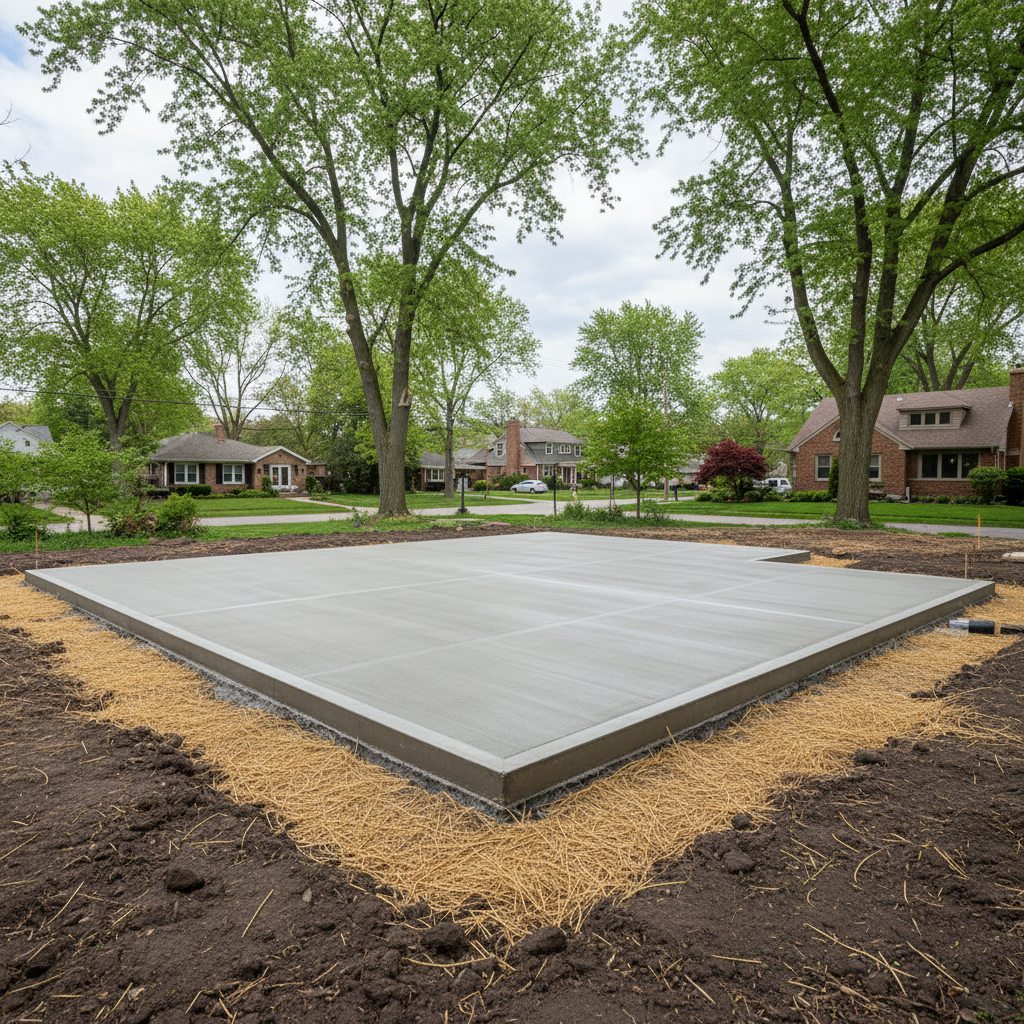
Alright, let's talk foundations. If you're building an addition, a new garage, or even a whole new house here in Oak Park, you're going to need a solid foundation. And naturally, you're wondering what that's going to set you back. It's not a simple answer, but I can give you a pretty good idea of what to expect and what drives those numbers.
What Makes Foundation Prices Go Up or Down?
A lot of things go into the final price of a concrete foundation. It's not just the concrete itself. Here's what I look at when I'm putting together a quote:
- Size and Complexity: This is the big one. A small, simple slab for a shed is way different from a full basement foundation with multiple footings, walls, and drain tile. The bigger the footprint, and the more intricate the design (think odd angles, multiple levels, or deep frost walls), the more labor and materials it's going to require.
- Soil Conditions: This is huge, especially around here. Oak Park has some pretty varied soil. You might hit nice, firm clay, or you could run into soft, sandy spots, or even old fill. If we have to dig deeper to find stable ground, or if we need to bring in engineered fill, that adds to the cost. Sometimes, we even need to install special drainage or use more rebar if the soil isn't ideal.
- Excavation: How much dirt needs to be moved? Is the site easily accessible for heavy equipment? If we're digging out a full basement, that's a lot of dirt that needs to be hauled away. If it's a tight lot, like some of those older bungalow properties near Frank Lloyd Wright's Home and Studio, access can be tricky, and that can mean more manual labor or smaller equipment, which takes longer.
- Foundation Type: Are we talking about a simple slab-on-grade, a crawl space, or a full basement? Each has different material and labor requirements. A full basement, for example, needs taller walls, more concrete, extensive waterproofing, and often more complex excavation.
- Reinforcement: Almost every foundation needs rebar or wire mesh for strength. The amount and type depend on the load the foundation needs to support and local building codes. More steel means more material cost and more time to place it correctly.
- Waterproofing and Drainage: This is crucial in our climate. You don't want a leaky basement. This includes things like exterior waterproofing membranes, drain tile systems (perforated pipes around the perimeter), and sump pump pits. Don't skimp here; it'll save you headaches and money down the road.
- Permits and Inspections: You'll need permits from the Village of Oak Park, and there will be inspections at various stages. These aren't usually a huge cost compared to the overall project, but they're a necessary part of the process.
Typical Cost Ranges for Concrete Foundations in Oak Park
Okay, let's get down to some numbers. Keep in mind these are rough estimates for Oak Park and the surrounding suburbs. Every job is unique, but this should give you a ballpark:
- Slab-on-Grade (for a detached garage or addition): For a basic, unheated slab for something like a 2-car garage (around 400-500 sq ft), you're probably looking at $8,000 to $15,000. This includes excavation, gravel base, vapor barrier, rebar/mesh, and a 4-6 inch concrete pour. If it's a heated slab for living space, expect more due to insulation and potentially more complex rebar.
- Crawl Space Foundation: For a typical 1,000 sq ft footprint, a crawl space foundation might run you anywhere from $25,000 to $45,000. This includes footings, 3-4 foot concrete walls, damp-proofing, and basic drain tile.
- Full Basement Foundation: This is the most involved. For a 1,000 sq ft basement footprint, you could be looking at $45,000 to $80,000+. This includes deep excavation, footings, 8-9 foot concrete walls, extensive waterproofing (membrane, drain tile, gravel backfill), and a concrete floor slab. The deeper the basement, or if you need special features like egress windows or a walk-out, the higher the cost.
These ranges can swing quite a bit based on the factors I mentioned earlier. For example, a really difficult excavation or extensive waterproofing could push those numbers higher.
What's Included in a Quote from Ace Concrete?
When you get a quote from us, we try to be as detailed as possible. You should always expect a breakdown that includes:
- Excavation: Digging, hauling away spoils, and preparing the subgrade.
- Formwork: Setting up and removing the forms that shape the concrete.
- Reinforcement: All rebar, wire mesh, and any other steel needed.
- Concrete Materials: The cost of the concrete itself, delivered.
- Pumping/Placement: Getting the concrete from the truck into the forms.
- Finishing: Screeding, floating, and troweling the concrete surface.
- Waterproofing/Drainage: Details on membranes, drain tile, and gravel.
- Backfill: Putting the dirt back around the foundation walls.
- Labor: The crew's time on site.
- Permit Assistance: We can often help you navigate the permit process.
What's usually NOT included in a foundation quote are things like plumbing rough-ins, electrical conduit, or HVAC ductwork that might go into or through the foundation. Those are typically handled by other trades.
How to Avoid Overpaying
Nobody wants to get ripped off, especially on something as critical as a foundation. Here's my advice:
- Get Multiple Bids: Don't just go with the first contractor you call. Get at least three detailed quotes. This helps you compare apples to apples and understand the market rate.
- Check References and Reviews: A good contractor will have a solid track record. Ask for references, check online reviews, and make sure they're properly licensed and insured.
- Understand the Scope: Make sure every quote clearly spells out exactly what's included. If one quote is significantly lower, find out why. Are they skipping waterproofing? Using less rebar? Cutting corners somewhere?
- Don't Chase the Lowest Price: The cheapest bid isn't always the best value. A foundation is literally the base of your structure. You want it done right, even if it costs a little more upfront. Fixing a bad foundation later is incredibly expensive and disruptive.
- Ask Questions: If you don't understand something in the quote, ask! A good contractor will take the time to explain it to you.
- Get Everything in Writing: Every detail, every cost, every timeline. It protects both you and the contractor.
Building a foundation is a big investment, but it's one you absolutely can't afford to mess up. Do your homework, ask the right questions, and choose a contractor who knows their stuff and communicates clearly. That's how you get a solid base for your Oak Park project.