Why do my concrete sidewalks crack, even new ones?
You're definitely not the only one asking this question. Honestly, it's probably the most common thing I hear from folks. The plain truth is, almost all concrete will eventually crack. It's just what concrete does. See, concrete naturally shrinks a bit as it cures and dries. On top of that, here in Illinois, we really deal with some wild weather swings, which means changing moisture levels and soil movement. All these things can cause small cracks to show up, even in a sidewalk that was installed perfectly.
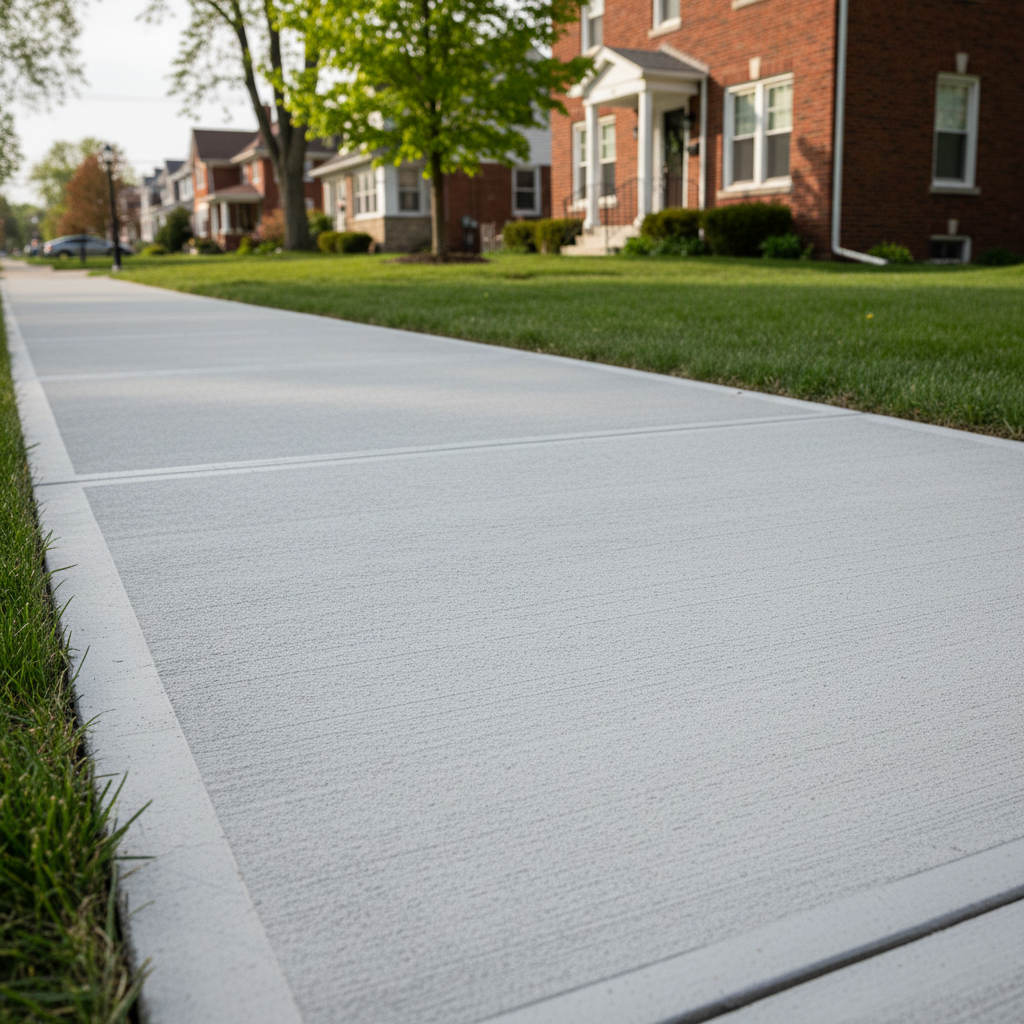
The real goal isn't to prevent all cracking forever, because that's just not realistic, is it? What we aim for with a good installation is to control where and how those cracks actually appear. That's precisely why you see those lines cut into sidewalks — they're called expansion or control joints. They give the concrete a planned spot to expand and contract when temperatures change, which helps relieve stress and prevents those random, unsightly cracks from popping up where you don't want them.
What's the difference between a cosmetic crack and a structural problem?
That's a really good question, and it's key to figuring out when you should actually start to worry. A lot of the cracks you see are just cosmetic drying shrinkage cracks. These are usually thin, hairline cracks, generally less than 1/16 inch wide, and they don't really affect the slab's strength. You'll spot these a lot in residential sidewalks and patios all over Oak Park, mainly because of our seasonal expansion and contraction here.
Now, a structural crack is a completely different animal. These are cracks that are wider than 1/4 inch, or where one side of the slab is noticeably higher or lower than the other — what we call vertical displacement. These kinds of cracks can point to bigger issues like foundation movement, a poor installation job, drainage problems, or even structural failure. If you've got wide, spreading cracks, crumbling edges, or concrete that's clearly sinking, that's definitely when you need to give us a call for a closer look.
How long should a concrete sidewalk last in Oak Park?
A concrete sidewalk that's been installed well, and gets proper care, can last a good 25 to 30 years. Sometimes even 40 years. Some sources even suggest 50 years or more. But here in Oak Park, with our freeze-thaw cycles, heavy snow, and hot summers, concrete really gets put through its paces, doesn't it? Poor installation or skipping maintenance can easily cut that lifespan down to just 10 to 15 years.
Things that shorten its life include: the quality of the original mix and how it was installed, how much it's exposed to our crazy weather and de-icing chemicals (especially salt), how well it was cured initially, and whether you keep up with maintenance like sealing. If you're seeing new cracks popping up more often, or if the concrete has lost its luster and resealing doesn't help, it might honestly be time to start thinking about replacement.
My sidewalk is uneven. Should I replace it or can it be lifted?
This is a really common issue, and honestly, lifting is often the better, more cost-effective choice — assuming the concrete isn't badly broken up. If your concrete is sinking because of soil issues like erosion or poor compaction, but it's otherwise in good shape without major cracks or deterioration, then lifting is probably your best bet. It's a smart move in many cases.
We use a process called polyjacking (or concrete leveling), where we inject a high-density polyurethane foam under the slab. This foam expands, filling any voids and lifting the concrete right back to its original, level position. It's usually much faster, cleaner, and can save you 50-70% compared to tearing out and pouring new concrete. Plus, it's ready for use almost immediately. However, if your sidewalk is severely cracked, crumbling, or has significant spalling (that's surface breakdown), then replacement is likely the only safe option.
Do tree roots really damage sidewalks, and what can I do about it?
Oh yeah, they absolutely do. Tree roots are a major culprit for sidewalk damage, especially in established neighborhoods like those around Scoville Park with lots of mature trees. Roots grow outwards looking for water, oxygen, and nutrients, and they can spread two to three times the width of the tree's canopy. When they grow under a sidewalk, they push upwards, causing cracks, uneven slabs, and dangerous trip hazards. It's not that roots actively break concrete, but they'll push against anything in their path as they expand. Once cracks form, water gets in, and that makes the problem worse, especially with our freeze-thaw cycles.
Sometimes, root barriers can help guide growth away from pavement. If you're seeing issues, it's a good idea to get a professional arborist involved to assess the tree's health and a concrete contractor to fix the sidewalk without harming the tree too much. The Village of Oak Park also has foresters who monitor trees, especially parkway trees, for these kinds of issues, which is a helpful resource.
When do I need a permit for sidewalk work in Oak Park?
You'll almost always need a permit for concrete work that involves replacing or installing new sidewalks. The Village of Oak Park considers concrete work, including replacing sidewalks, as a type of repair or alteration that requires a permit. This is especially true if it's in the public right-of-way. These permits help make sure that the work meets local codes and standards.
If the City of Oak Park has identified your sidewalk for replacement as part of their biennial program, and their contractor does the work, you might not need to get the permit yourself. But if you hire your own contractor (like Ace Concrete) or do the work yourself, you'll definitely need to get that permit from the Office of Technical and Planning Services. We can help you work through that paperwork to make sure everything's by the book, honestly.