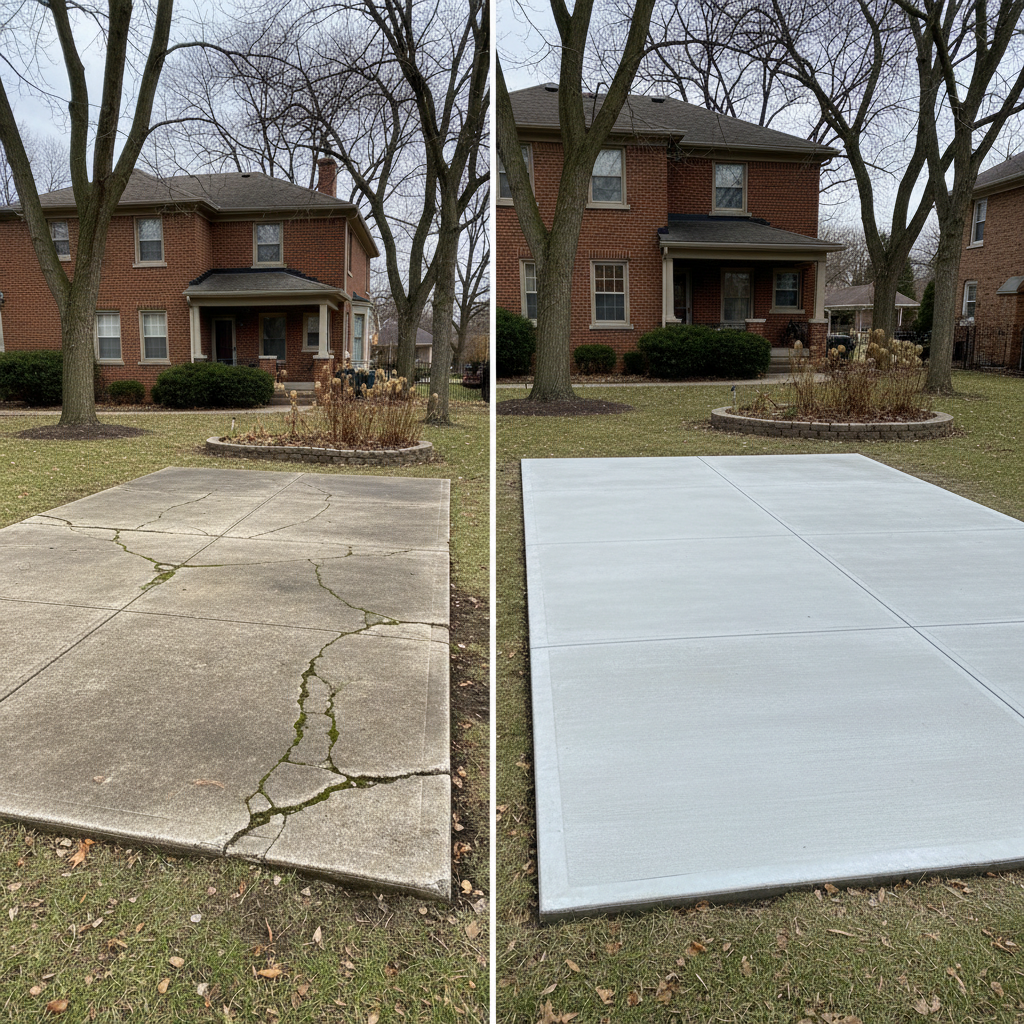
Alright, let's get down to business. You're probably looking to put in a new patio, maybe a walkway, or even a driveway right here in Oak Park. And you're likely asking yourself: should I stick with good old poured concrete, or are those interlocking pavers really worth the extra effort? It's a question we hear all the time, and honestly, there's no single perfect answer for everyone. But I can definitely tell you what I've learned over years of working on homes around here, from the old Victorians in Frank Lloyd Wright's historic district to the newer places further west.
Poured Concrete: The Tried and True
When most folks think about concrete, they're picturing poured concrete. It starts out liquid, we level it, and then it hardens into one solid slab. Seems pretty straightforward, right?
- Cost: Generally, poured concrete is your more budget-friendly choice upfront. We're talking about materials and labor that usually take less time and effort than pavers. You'll definitely save some cash on the initial installation.
- Durability: A concrete slab, when installed correctly, is super tough. It can handle heavy weight and lots of foot traffic. That "properly installed" part is key, though. It means a good sub-base, the right mix, and proper curing. Here in Oak Park, our freeze-thaw cycles can be brutal, so it's critical to have expansion joints cut just right to manage cracking. If we do it right, it'll last a really long time.
- Maintenance: It's pretty low maintenance. You'll want to seal it every few years to protect it from stains and the weather. If a crack does show up, you can patch it, but those patches aren't always invisible.
- Appearance: This is where some people feel poured concrete can look a bit plain. You can get it stamped or colored to add some flair, which definitely boosts the look, but it's still one big, solid surface.
Interlocking Pavers: The Flexible Alternative
Pavers are individual pieces, usually made of concrete or sometimes natural stone, that fit together like a puzzle. We lay them over a prepared base of gravel and sand.
- Cost: Expect to pay more for pavers. That goes for both the materials themselves and the labor to put them in. It's a more time-consuming job, laying each piece by hand.
- Durability: This is where pavers really shine, especially in our climate. Since they're individual units, they have some flexibility. When the ground shifts from freezing and thawing – and trust me, it *will* do that every winter here in Illinois – the pavers can move a little bit with it without cracking. If one gets damaged, you can usually just swap out that single paver. That's a huge advantage over a cracked concrete slab, wouldn't you say?
- Maintenance: Pavers need a bit more attention. You'll have to sweep sand into the joints periodically to keep them stable. Weeds can sometimes sprout between them if they're not properly maintained or if you don't use polymeric sand. Sealing is also a good idea to protect the color and prevent staining.
- Appearance: Pavers give you a ton of design flexibility. You've got different shapes, sizes, colors, and patterns to pick from. You can create some truly stunning, custom looks that are tough to get with plain poured concrete. They often give off a more upscale, European vibe, which can really complement some of the beautiful homes we have around here.
My Recommendation for Oak Park Homeowners
Look, if budget is your absolute top priority and you just need a solid, functional surface, poured concrete is a perfectly good choice. Just make sure whoever you hire – like us at Ace Concrete – really knows what they're doing with the sub-base and expansion joints for our specific weather conditions. You definitely don't want a slab that's going to heave and crack after just one bad winter.
However, if you're looking for something that will hold up better to our notorious freeze-thaw cycles, offers more design versatility, and you're okay with a slightly higher upfront cost and a bit more maintenance, then I'd lean towards pavers. Being able to replace individual units is a big deal when you're thinking about long-term durability and appearance. For a patio or a decorative walkway, pavers often give you a better return on your investment in terms of curb appeal and longevity.
Ultimately, it comes down to what matters most to you: initial cost versus long-term flexibility and aesthetic options. Think about how you'll use the space, what look you're going for, and what your budget allows. Either way, make sure you're working with a contractor who understands the unique challenges of building outdoors in Oak Park. We've seen it all, and we're here to help you make the right call for your home.